
161 Maiden Lane
The Tower That Leaned and the 30 Seconds That Could Have Prevented It
A Preventable Failure.
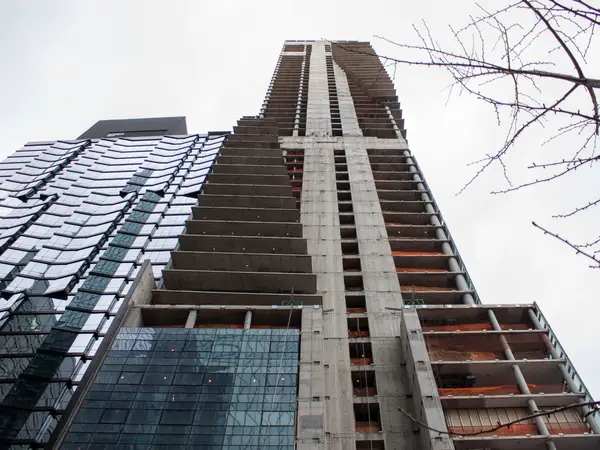
In 2019, residents of a newly completed luxury tower at 161 Maiden Lane in Manhattan’s Financial District were told something unsettling: their building was leaning.
By then, the damage was irreversible. The 60-story tower had settled unevenly, tilting several inches to the north. Lawsuits followed. Engineers debated responsibility. Remediation costs ballooned into the hundreds of millions. But the most uncomfortable truth emerged quietly: Nothing about the failure was unknown.
The Real Failure Was Informational
The warning signs were present years earlier, embedded in the project’s own documents, but no system existed to reconcile them.
According to the New York City Department of Buildings, the root cause was differential settlement tied to foundation design decisions made during pre-construction (NYC DOB filings, 2019–2020). According to court records and engineering analyses cited by The New York Times, the project’s geotechnical recommendations were overridden during value engineering to reduce cost and schedule.
This case study demonstrates that the failure at 161 Maiden Lane was detectable before construction began, and that modern verification systems can surface such risks in seconds, not years.
Construction failures are often framed as engineering mistakes. But research suggests otherwise.
According to the Construction Industry Institute, up to 30% of construction costs are lost to rework, largely driven by miscommunication and inconsistent information across project teams. According to FMI Corporation, information-driven rework alone costs the U.S. construction industry over $170 billion annually.
161 Maiden Lane was not an exception. It was a textbook case.
What the Documents Said — Separately
The project’s geotechnical report warned that the site sat atop soft, compressible soils, recommending: “Deep foundation elements (drilled caissons or piles) extending to bedrock.”
This is not a suggestion. In engineering practice, geotechnical recommendations define the physical constraints of a site. According to the American Society of Civil Engineers (ASCE), foundation systems that deviate from geotechnical recommendations require explicit review and sign-off due to settlement risk.
However, during pre-construction, the structural design was revised. Instead of deep piles, the foundation system was changed to a mat slab on improved soil. The rationale, according to reporting by The New York Times and court filings, was cost and schedule efficiency.
Each decision, in isolation, appeared reasonable. Together, they were fatal.
Graph 1: The Hidden Authority Conflict
Graph 1: Authority Hierarchy
Traditional workflows failed to enforce this hierarchy, allowing a Tier 2 document to override a Tier 1 mandate.
The Blind Simulation
To test whether this failure was detectable ex-ante, EatherLabs ran a blind simulation using only pre-construction documents. No historical context. No knowledge of the outcome.
Seven documents were ingested into the SightSite Construction Certainty Platform, which assigns constitutional authority to each document based on industry standards.
Graph 2: Automated Conflict Detection
Graph 2: Automated Conflict Detection
System logic runs continuously on every document upload.
The Cost of Silence
According to public reporting, estimated remediation and legal exposure exceeded $100 million. Property value and resident confidence were permanently damaged. Litigation dragged on for years.
According to McKinsey & Company, design changes caught pre-construction cost 10–100× less than those discovered after execution begins.
The issue at 161 Maiden Lane could have been resolved with a design meeting. Instead, it required lawsuits.
Graph 3: What Happens With vs. Without Verification
Graph 3: The Cost of Verification
Conclusion
161 Maiden Lane was not a black swan. It was a contradiction. A contradiction buried in documents that were never designed to speak to each other.
This case study demonstrates that modern verification systems can surface such contradictions before construction begins, transforming nine-figure failures into early, inexpensive corrections.
The technology exists. The data already exists. The only thing missing, until now, was a system that could reason over authority.
Sources & References
Sources & References
- •American Society of Civil Engineers. (2017). Minimum design loads and associated criteria for buildings and other structures (ASCE/SEI 7-16). ASCE. https://ascelibrary.org/doi/book/10.1061/9780784414248
- •Construction Industry Institute. (2018). Rework causes and impacts in construction. Construction Industry Institute. https://www.construction-institute.org/resources/knowledgebase
- •FMI Corporation. (2018). The hidden costs of poor information management in construction. FMI Corporation. https://fmicorp.com/insights/reports/the-hidden-costs-of-poor-information-management/
- •McKinsey & Company. (2017). Reinventing construction: A route to higher productivity. McKinsey Global Institute. https://www.mckinsey.com/industries/capital-projects-and-infrastructure/our-insights/reinventing-construction-through-a-productivity-revolution
- •Moody’s Investors Service. (2020). Construction risk: Execution and cost overrun considerations. Moody’s. https://www.moodys.com/research
- •New York City Department of Buildings. (2019). Structural safety filings and monitoring reports: 161 Maiden Lane. NYC DOB. https://www.nyc.gov/site/buildings/index.page
- •New York Times. (2019, August 27). A luxury tower that leaned—and the costly fight to fix it. https://www.nytimes.com/2019/08/27/nyregion/leaning-tower-fidi.html
- •New York Times. (2020, February 20). Why a Manhattan skyscraper is tilting—and who is to blame. https://www.nytimes.com/2020/02/20/nyregion/leaning-tower-lawsuit.html